
Photos that prove our gene-editing can make wheat plants tolerant to frost
January 18, 2025
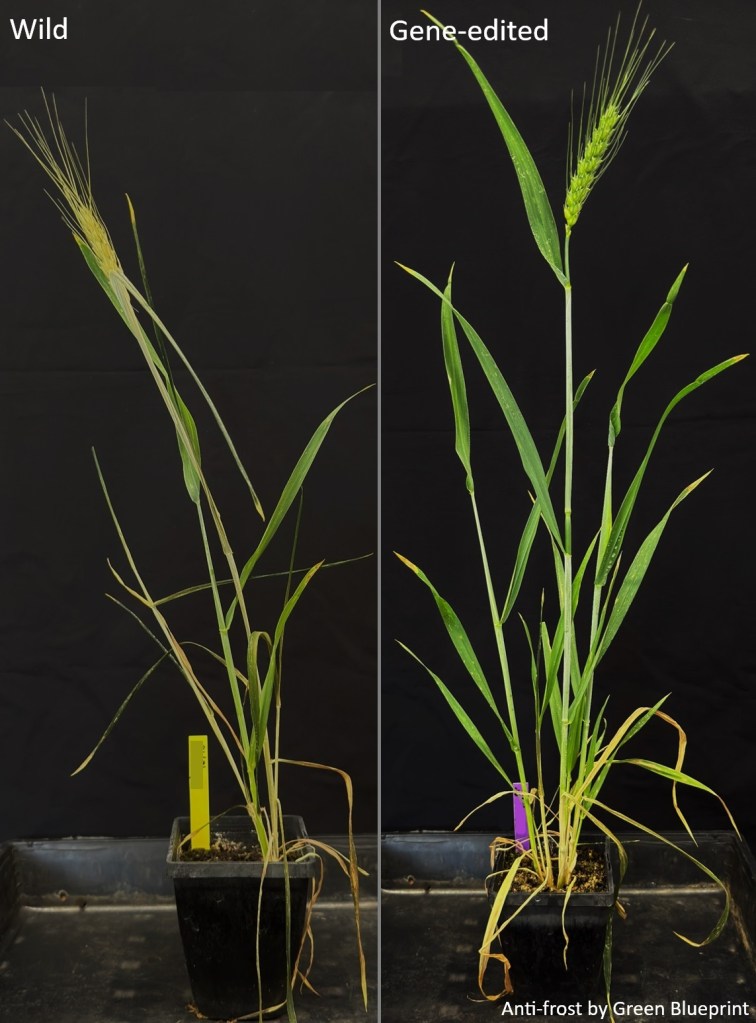
Figure 1: One week after a −5°C treatment at the booting stage, when the plants are most vulnerable to frost.
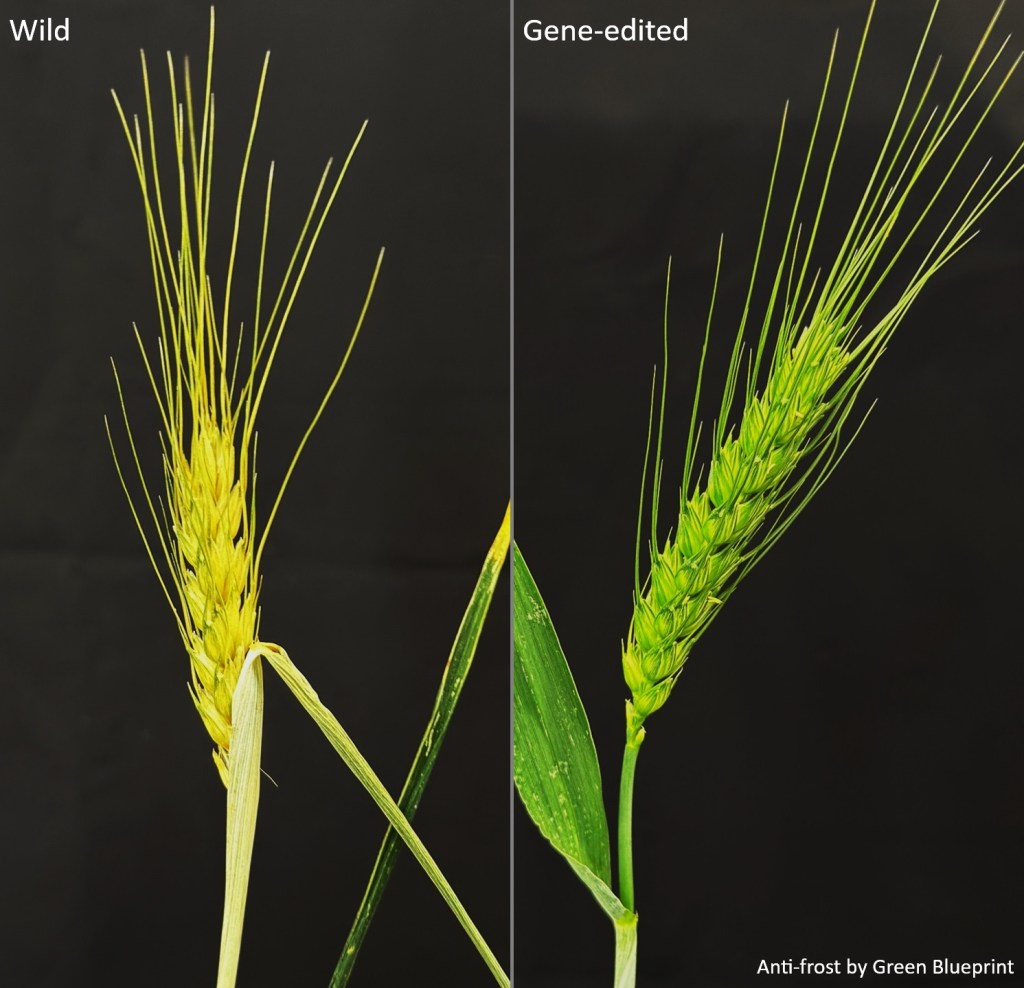
Figure 2: One week after the −5°C treatment at the booting stage, close ups.
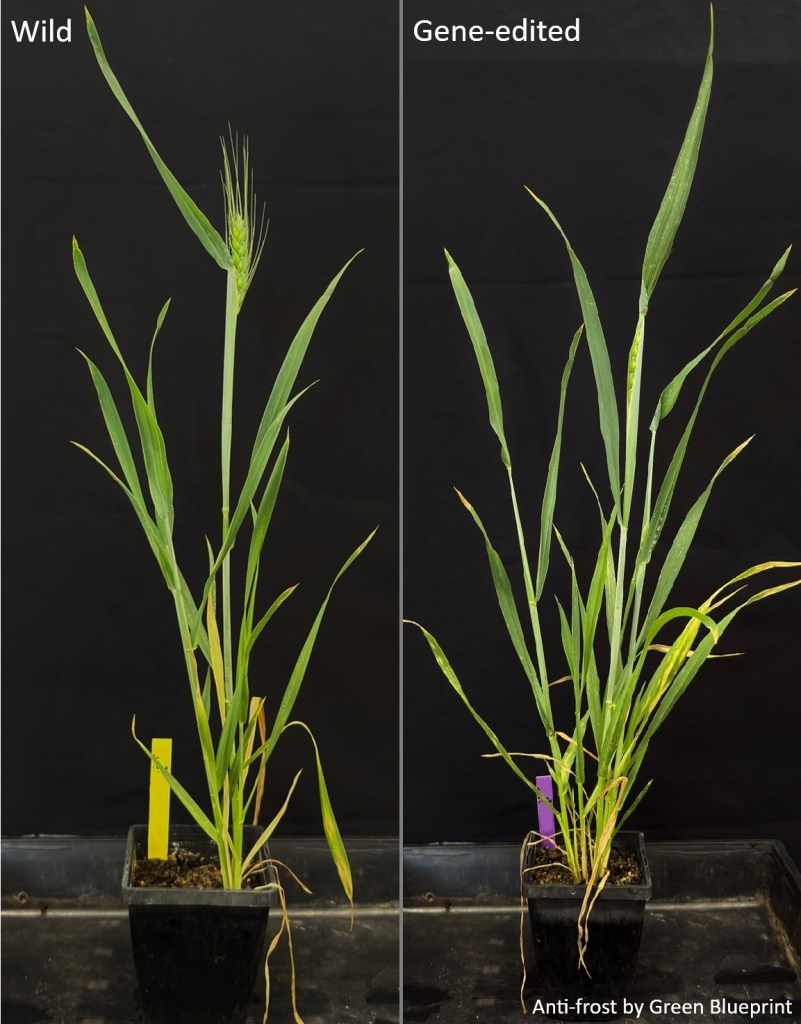
Figure 3: The same two plants, before the −5°C treatment.
This was achieved using gene editing (GEd), not genetic modification (GM). This technology has been de-regulated in Australia, which means our gene-edited plants can be grown as conventional wheat crops.
This work shows tremendous potential, with successful trials in the greenhouse. The next stage is to test the edited plants at the anthesis and grain filling stages, to test the plants in the field, to select the best frost-tolerant lines for yield and performance, and to generate new frost-tolerant wheat varieties.
Background
Wheat plants naturally produce anti-frost proteins, which protect young wheat plants from frost damage early in their lives. Wheat evolved in the Fertile Crescent of the Middle East, where it sprouted in spring and grew over summer. So, the wheat plants only needed frost protection early in their lives. As a result, wheat plants produce much less anti-frost protein as they grow.
In Australia, wheat is planted in autumn (April-May), grows over a mild winter, and is harvested in spring and early summer (October-December). Frost can strike later in the plant’s life, from August to October, after the plants have stopped producing significant amounts of anti-frost proteins. This is when the plants are at their most vulnerable, during flowering and early seed set. In an average year, frost damage causes direct crop losses of about 6%. In addition, efforts to avoid frost damage—such as delaying sowing (which lowers yield), or not using certain parts of paddocks—can bring the total average production loss up to about 15%.
Green Blueprint has found how to get a wheat plant to produce anti-frost proteins for its entire life. We have tested the effectiveness of these proteins in tobacco plants (a useful and commonly used test plant) and in wheat plants grown in cold-temperature growth chambers.
Green Blueprint achieved this using gene editing (GEd), not genetic modification (GM). Technically, we made an SDN-1 edit. There will be no introduced DNA in the final SDN-1 frost-tolerant wheat plants that Green Blueprint generates. This technology has been de-regulated in Australia, which means the SDN-1 edited plants can be grown as conventional wheat crops. To be clear, the technology used by Green Blueprint does not make a resultant wheat variety a GM crop. Gene-edited crops are being de-regulated by our trading partners and are increasingly gaining consumer acceptance worldwide.
Green Blueprint is confident they can do the same for barley, and also rice.
Other indications that our gene-editing works
Green Blueprint previously isolated natural anti-frost proteins (AFPs) from wheat and barley, and transported the genes that produce them into tobacco plants. Tobacco is often used to study the functions of genes with relative ease, because it is straightforward to transform and because its life cycle is shorter. Our tests show that when a wheat AFP is expressed in tobacco, the plants withstand cold damage.
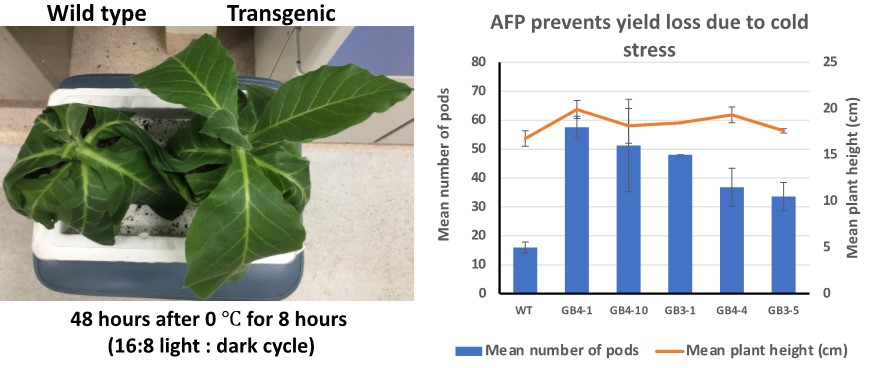
Figure 4: After 48 hours at 0°C, the wild tobacco plant on the left is flaccid but the gene-edited tobacco plant on the right, which is making the wheat anti-frost protein, is healthy. The tobacco plants with AFPs (“GB-x”) are much higher yielding than those without AFPs (“WT”) after cold treatment.
With wheat AFPs present the cells have less electrolyte leakage, compared to the wild tobacco plants—which become flaccid and die after treatment at −2°C for a few hours. The tobacco plants with the wheat AFP gene also develop better than the wild type after cold treatment, without compromising yield.
Green Blueprint has used gene-editing to create new wheat lines with high levels of AFP expression at the critical stages of frost susceptibility (confidential data).
What impact might this have?
Australia’s annual wheat production averages about 24 million tonnes (9 mt in Western Australia). A boost of 15% due to frost protection would increase annual production by 3.6 million tonnes (1.3 mt in WA). At 400 AUD per tonne, that extra production is worth about $1.4 billion ($0.5 b in WA) per year.
Australian barley production is about 30% of wheat. Although barley is considered more tolerant than wheat, frost still causes substantial losses for Australian barley producers. Reproducing the anti-frost technology in barley might increase production by 1.5 million tonnes (0.6 mt in WA). At 350 AUD per tonne, that extra production is worth about $0.5 billion ($0.2 b in WA), per year.
There is also potential to apply the technology to breeding programs overseas. Green Blueprint has already received interest from an international company.
 Green Blueprint